TOC
Home > Research areas > Programme Area 1 > Developmental and Mucosal Immunology
  • Kategorie: Programme Area 1

Developmental and Mucosal Immunology
  • Kategorie: Chronic Inflammation
  • Kategorie: Innate Immunity
  • Kategorie: Microbiota
  • Kategorie: Tissue homeostasis

Development and function of the innate immune system

Our current and future research is focused on a molecular understanding of how components of the innate immune system promotes tissue homeostasis by contributing to the adaptation of multicellular organisms to pernicious environments, such as those at barrier surfaces (e.g., intestine, skin).


About us

Our lab has recently contributed to the discovery of innate lymphoid cells (ILCs), a group of tissue-resident innate lymphocytes located at border surfaces that release cytokines specifically acting on epithelial cells thereby contributing to tissue homeostasis and to the adaptation of the host in response to noxious compounds and tissue damage. A focus has been the analysis of transcriptional programs controlling lineage specification, commitment and function of ILCs. We recently identified a common, Id2-expressing progenitor to all ‘helper-like’ ILC lineages, the CHILP (Klose, Cell 2014). Our previous work has revealed that functional perturbations of ILC predispose to intestinal infections and to chronic inflammatory bowel diseases. It is likely, that such studies will identify new targets for the treatment of debilitating chronic inflammatory disorders.

The role of environmental factors (microbiota, nutrients) for the formation of an effective and well calibrated innate immune response is recognized. Mononuclear phagocytes germ-free mice were unable to produce most pro-inflammatory cytokines (in particular type I IFN), and, consequently, germ-free mice were more susceptible to infections with viruses (Ganal, Immunity 2012). On a mechanistic level, we showed that signals of the microbiota are needed to remove a chromatin barrier required for the transcription of genes after ligation of pattern recognition receptors (PRR). Ongoing studies address the mechanistic underpinnings of this process as well as the microbiota-derived signals that tune mononuclear phagocyte responses. As many autoimmune diseases have a type I IFN signature, it is possible that dyscalibration of the mononuclear phagocytes by the microbiota may contribute to rheumatic diseases.

Much has been learned about how the microbiota contributes to many aspects of host physiology. In contrast, the role of nutrients for development and function of the intestinal immune system has largely been a matter of speculation owing to the fact that molecular sensors of dietary molecules are widely unknown. Given the broad role of nutrients in metabolic diseases and the impact of intestinal cancer on human health, research into the question of how the power of nutrients can be harnessed for improving human health and for the prevention of disease is much warranted. We have recently found that the aryl hydrocarbon receptor (AhR), a transcription factor activated by small molecular ligands, is required for the development of innate immune system components by serving as a sensor for phytochemicals. Based on these preliminary data, we aim now to systematically define the role of diet-induced changes for the function and differentiation of mucosa-associated innate lymphocytes and to uncover how innate lymphocytes regulate epithelial adaptation by controlling niche support for intestinal epithelial stem cells.

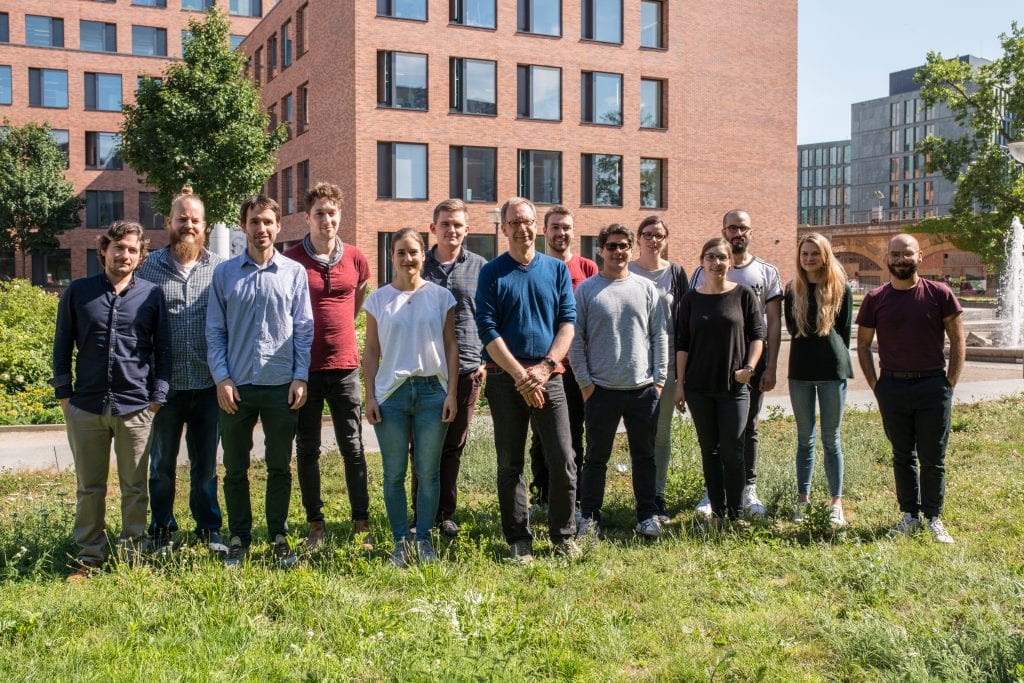
Team

Group leader
Univ. Prof. Dr. med. Andreas Diefenbach

Postdocs/Clinician Scientists
Atsuyo Ikeda
Michael Kofoed-Branzk
Irene Mattiola
Tiago Mota
Caroline Tizian
Mario Witkowski

Doctoral students
Ana Fagundes
Zihan He
Luke Houghton
Luise Kausch-Blecken
Anita Kowalczyk
Diego Perez Vazquez
Almina Polinova
Bruno Rocha
Mikka Schiller
Omer Shomrat
Merlin Finn Thieme
Nilsu Turay
Louisa Wutsdorff

Visiting doctoral students
Lorenzo Tomassini
Annagioia Ventrici
Eduarda Gomes

Bachelor/Master students
Esin Halila
Lilou Deniau
Julia Werkmeister
Helena Borgers
Nam Mi Jabs
Hanna Borowiak
Gökçe Günzel

Student assistants
Hanna Borowiak
Mia Mary
Marlene Lapson
Nam Mi Jabs
Noah Weingart

Main cooperation partners

Mir-Farzin Mashreghi, Anja Hauser, Chiara Romagnani, Eicke Latz, Andrey Kruglov, Antigoni Triantafyllopoulou, Max Löhning, Bastian Opitz, Christoph Klose

Caspar Ohnmacht

Salome Pinho, Greg Sonnenberg, Serge van de Pavert, Guiseppe Sciumè

More Information about

How does the immune system cause chronicity in rheumatic inflammation?