Microbiota fingerprint helps in the diagnosis of IgG4-related diseases
Researchers at the DRFZ, Charité and TU Berlin have identified a characteristic intestinal microbiota signature in patients with IgG4-related disease. Using single-cell analysis and machine learning, the disease can be detected with high accuracy via a non-invasive stool sample. The findings provide proof of concept for new complementary diagnostics that enable earlier detection and reduce organ damage caused by late diagnosis. The results were published in the journal eBioMedicine.
IgG4-related disease (IgG4 RD) is a rare, chronic inflammatory systemic disorder that can affect organs such as the pancreas, salivary glands, bile ducts and kidneys. As the clinical presentation mimics many other conditions, most patients already have permanent organ damage by the time of diagnosis.
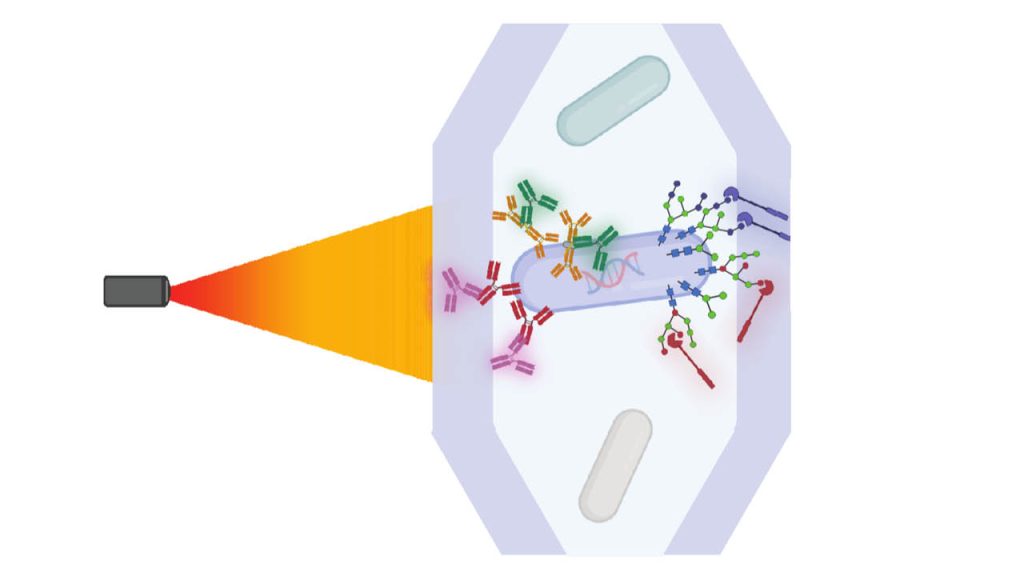
The teams led by PD Dr Tobias Alexander (DRFZ and Charité) and Prof. Dr Hyun-Dong Chang (DRFZ and TU Berlin) compared stool samples from IgG4-RD patients and healthy control subjects using two complementary methods: established 16S rRNA gene sequencing to determine the taxonomic bacterial composition, and single-cell flow cytometry developed at the DRFZ to investigate bacterial surface properties.
Based on the phenotypic microbiota characteristics microbiota fingerprint, IgG4-RD patients could be classified with 80–90% certainty. Classification based on taxonomic composition could not be validated, with a probability of less than 60%.
This study provides proof of concept that a microbiota fingerprint can classify IgG4-related diseases with considerable accuracy using a non-invasive stool sample. Although tissue biopsy remains the diagnostic gold standard, these results pave the way for complementary tools that could accelerate diagnosis and reduce organ damage.
This study was funded by the Rolf M. Schwiete Foundation, the ERDF project BacFlow, the DFG and the IMI2 Joint Undertaking (3TR, grant number 831434).